Options trading attracts traders for one simple reason. It offers flexibility. You can trade direction, time, volatility and even uncertainty. Yet most traders struggle because they jump into options without understanding which strategy fits which market condition.
There is no single best option strategy that works all the time. What works in a trending NIFTY market fails in a sideways one. What generates steady income can become dangerous during volatility spikes. The real edge comes from knowing which strategy to use and when.
This guide brings together the top 10 option trading strategies every NIFTY trader should know, explained in a practical, Indian market context. These strategies are used by investors, positional traders and weekly option sellers. Each one serves a different purpose, from capital growth to income generation and risk protection.
If you want consistency in options trading, learning strategy selection is more important than learning entries.
| Strategy | Market View | Risk | Profit Potential | Best Used When | Avoid When |
|---|---|---|---|---|---|
| Long Call | Bullish | Limited | Unlimited | Strong breakout with momentum | Sideways or late-expiry markets |
| Long Put | Bearish | Limited | High (Downside) | Support breakdown with selling pressure | Panic selling or oversold zones |
| Bull Call Spread | Mild Bullish | Defined | Limited | Slow upward move | Strong trending rallies |
| Bear Put Spread | Mild Bearish | Defined | Limited | Controlled downside move | Sharp breakdowns |
| Covered Call | Sideways to Mild Bullish | Downside Risk | Capped | Range-bound market with resistance | Strong bullish breakout |
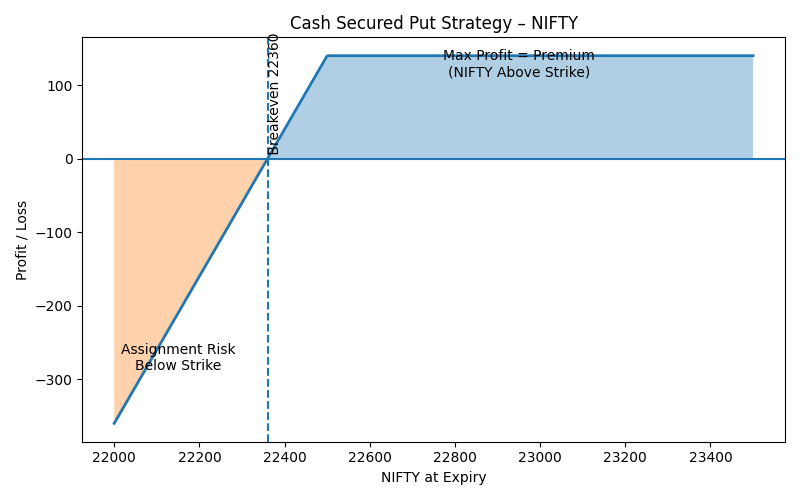
| Cash Secured Put | Bullish with Patience | Assignment Risk | Premium Income | Near strong support levels | Falling or breakdown markets |
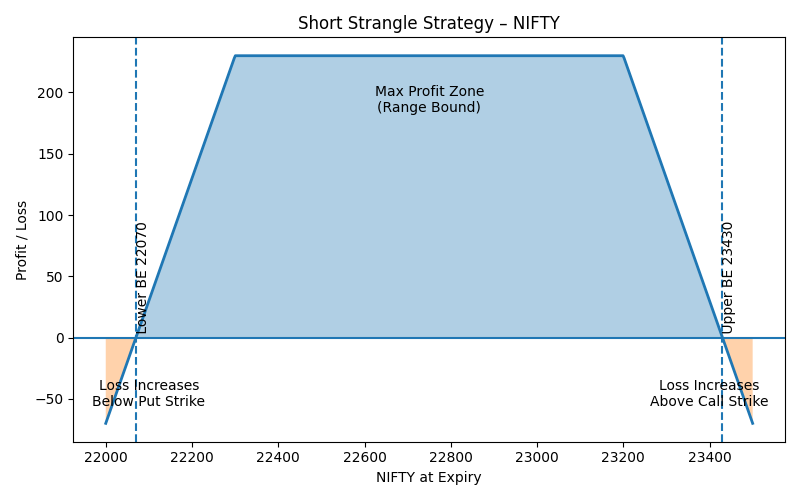
| Short Strangle | Sideways | High | Limited | Low volatility, range-bound weeks | Trending or event weeks |
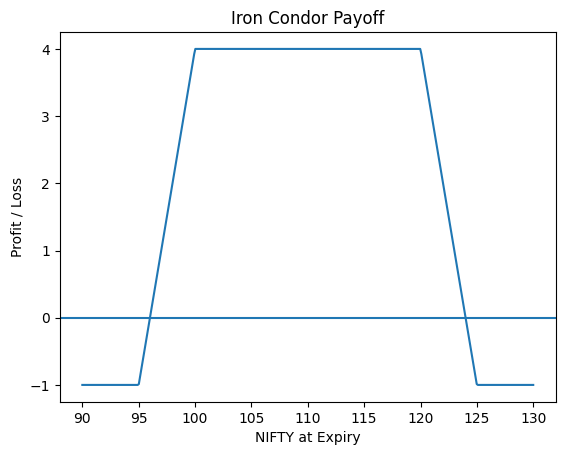
| Iron Condor | Sideways | Defined | Limited | Stable consolidation phases | Strong directional movement |
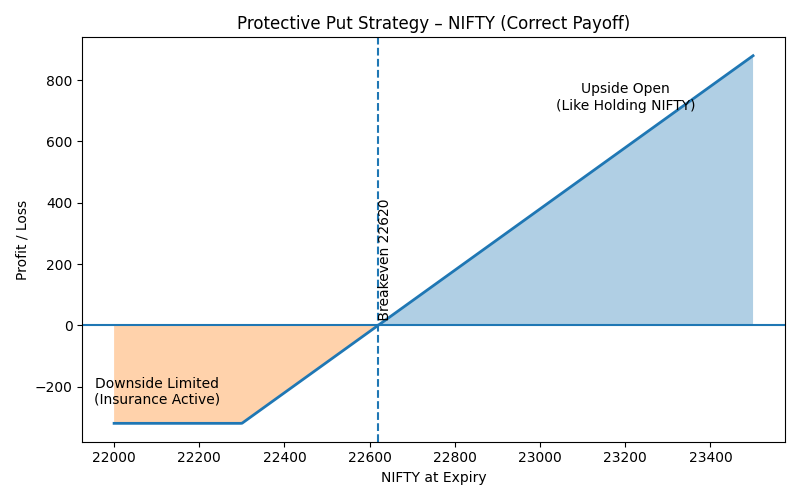
| Protective Put | Uncertain | Premium Cost | Capital Protection | Before events or volatility spikes | Calm, low-volatility markets |
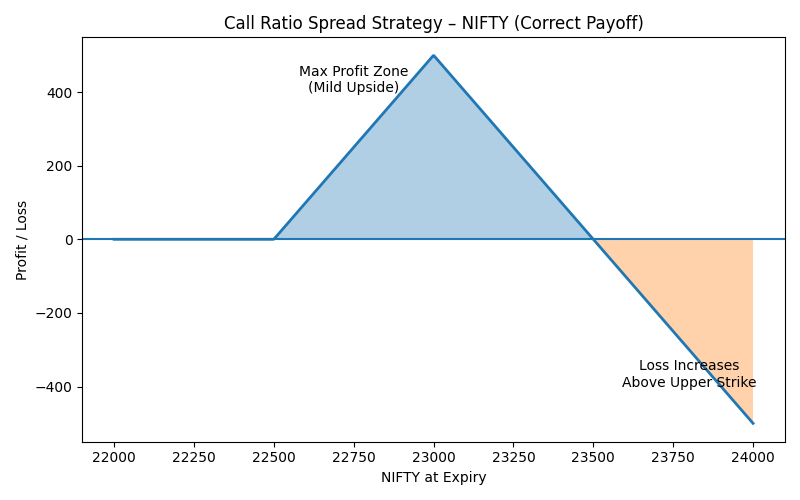
| Call Ratio Spread | Mild Bullish / Range-bound | High Above Strike | Moderate | Limited upside near resistance | Strong bullish breakout |
1. Long Call Strategy
Quick Summary
Market view: Bullish
Risk: Limited
Profit potential: Unlimited
Best for: Breakouts and momentum moves

When to use
Use this strategy when NIFTY breaks above resistance with strong momentum and volume. Works best early in the week.
When to avoid
Avoid during sideways markets, near expiry day, or when volatility is already high.
👉 Internal link: Long Call Strategy
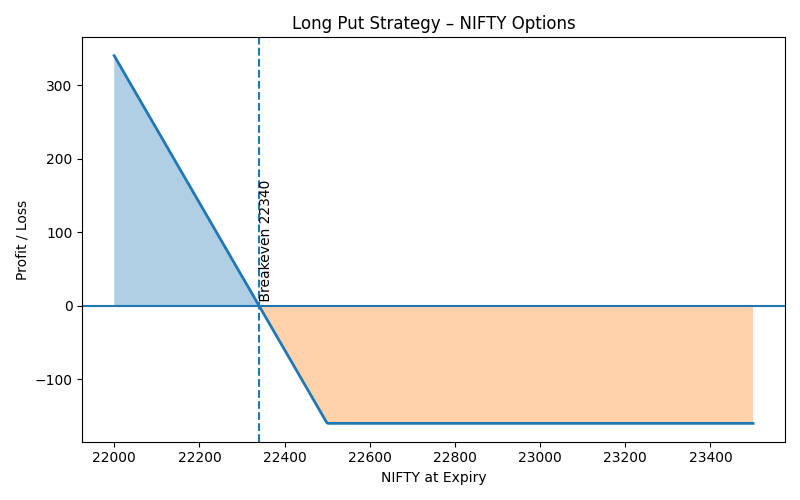
2. Long Put Strategy
Quick Summary
Market view: Bearish
Risk: Limited
Profit potential: High on downside
Best for: Support breakdowns
When to use
Use when NIFTY breaks key support levels and selling pressure increases.
When to avoid
Avoid after panic selling or when market is deeply oversold.
👉 Internal link: Long Put Strategy
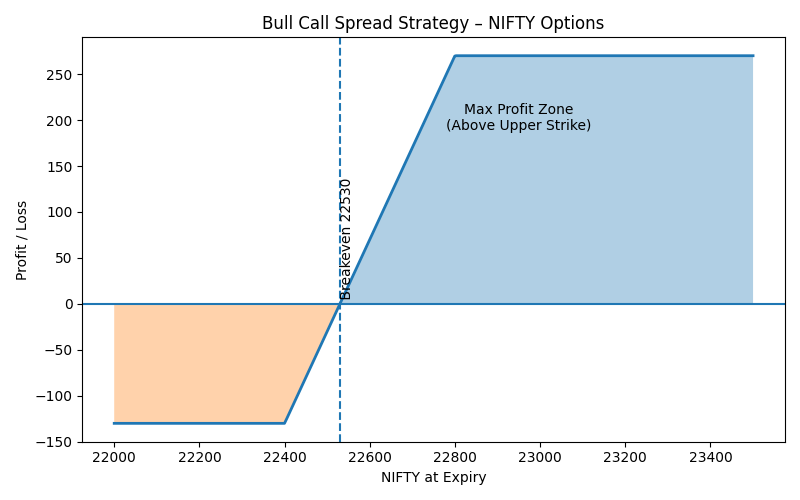
3. Bull Call Spread
Quick Summary
Market view: Mild bullish
Risk: Defined
Profit potential: Limited
Best for: Slow upward moves
When to use
Use when you expect NIFTY to rise moderately but not aggressively.
When to avoid
Avoid during strong trending rallies or very high volatility.
👉 Internal link: Bull Call Spread
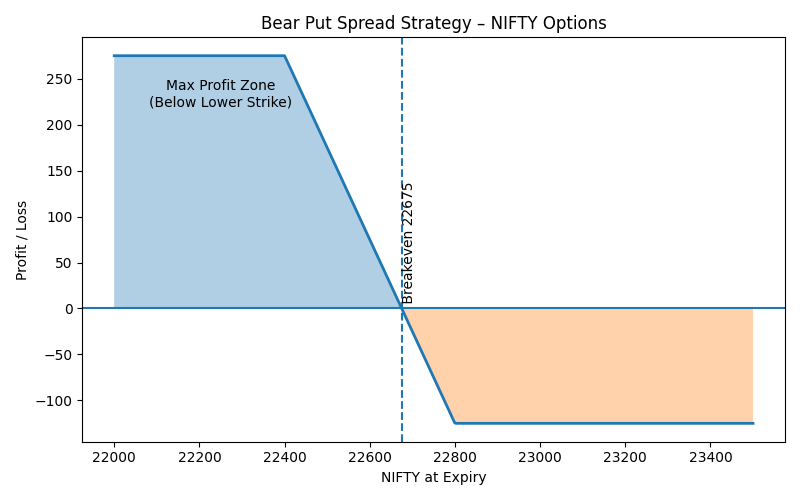
4. Bear Put Spread
Quick Summary
Market view: Mild bearish
Risk: Defined
Profit potential: Limited
Best for: Controlled declines
When to use
Use when downside is expected but major support lies nearby.
When to avoid
Avoid during sharp breakdowns or panic markets.
👉 Internal link: Bear Put Spread
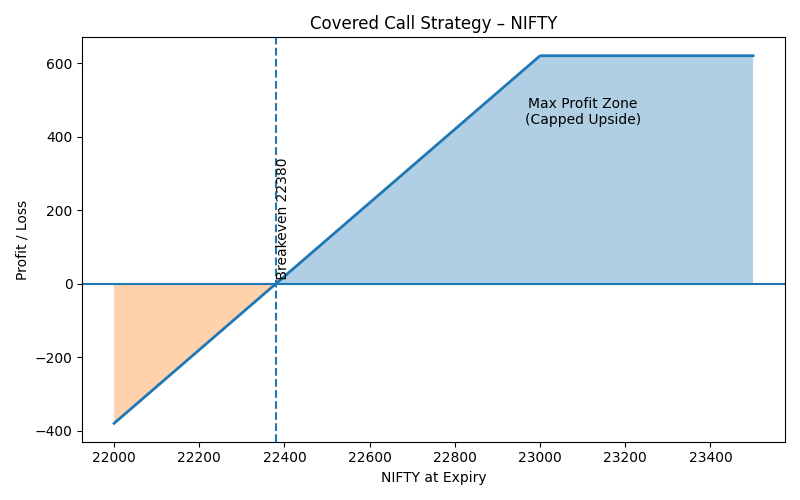
5. Covered Call Strategy
Quick Summary
Market view: Sideways to mildly bullish
Risk: Downside risk
Profit potential: Capped
Best for: Income generation
When to use
Use when NIFTY is range-bound and you want steady income from holdings.
When to avoid
Avoid during strong bullish trends or breakout phases.
👉 Internal link: Covered Call Strategy
6. Cash Secured Put Strategy
Quick Summary
Market view: Bullish with patience
Risk: Assignment risk
Profit potential: Premium income
Best for: Strategic entry
When to use
Use when you want to buy NIFTY at lower levels near strong support.
When to avoid
Avoid during falling markets or breakdown phases.
👉 Internal link: Cash Secured Put Strategy
7. Short Strangle
Quick Summary
Market view: Sideways
Risk: High
Profit potential: Limited to premium
Best for: Weekly income
When to use
Use when NIFTY is range-bound and volatility is expected to fall.
When to avoid
Avoid during trending weeks, events, or breakouts.
👉 Internal link: Short Strangle
8. Iron Condor
Quick Summary
Market view: Sideways
Risk: Defined
Profit potential: Limited
Best for: Stable income
When to use
Use when market is range-bound but you want controlled risk.
When to avoid
Avoid during sharp directional moves.
👉 Internal link: Iron Condor
9. Protective Put Strategy
Quick Summary
Market view: Uncertain
Risk: Premium cost
Profit potential: Protection focused
Best for: Capital safety
When to use
Use before events, high volatility phases, or market uncertainty.
When to avoid
Avoid if protection is unnecessary or volatility is very high.
👉 Internal link: Protective Put Strategy
10. Call Ratio Spread
Quick Summary
Market view: Mild bullish or range-bound
Risk: Unlimited above short strike
Profit potential: Moderate
Best for: Limited upside expectations
When to use
Use when NIFTY is expected to move slightly higher but stay below resistance.
When to avoid
Avoid when a strong breakout is expected.
👉 Internal link: Call Ratio Spread Strategy
Featured Snippet Optimized Summary
What are the best option trading strategies?
The best option trading strategies include Long Call, Long Put, Bull Call Spread, Bear Put Spread, Covered Call, Cash Secured Put, Short Strangle, Iron Condor, Protective Put and Call Ratio Spread. Each strategy works best under specific market conditions such as trending, sideways or volatile markets.
How to Use This Guide Effectively
Do not try to trade all strategies. Choose two or three based on your experience level and master them. Strategy selection combined with risk management is what creates consistency in options trading.