The Bear Put Spread option strategy is designed for traders who expect NIFTY to move lower, but not collapse sharply. Instead of aggressively buying puts and fighting time decay, this strategy allows traders to reduce cost, define risk, and trade bearish views with better control.
It is a structured alternative to naked put buying and is ideal for traders who want discipline over drama.
What Is a Bear Put Spread Option Strategy
A Bear Put Spread uses two put options with the same expiry:
• Buy one put option at a higher strike
• Sell one put option at a lower strike
Both options expire on the same date. The sold put reduces the cost of the bought put, which limits both profit and loss.
This makes the strategy risk-defined and calmer than a naked long put.
Why Traders Use Bear Put Spreads
Traders prefer bear put spreads because:
• Cost is lower than buying a naked put
• Time decay impact is partially offset
• Risk is predefined before entry
• Emotional stress is reduced
This strategy suits traders who expect a controlled decline, not panic selling.
When the Bear Put Spread Works Best
The bear put spread performs best when:
• NIFTY is mildly bearish
• Price breaks support but downside is limited
• Strong demand zones exist below
• Volatility is moderate
It works well during slow market weakness or distribution phases.
When You Should Avoid Bear Put Spreads
Avoid this strategy when:
• NIFTY is breaking down sharply
• Panic selling is already underway
• Volatility is extremely high
• A very deep fall is expected
In fast crashes, capped profit becomes a disadvantage.
Strike Selection Logic for NIFTY
Strike selection defines reward and probability.
General guideline:
• Buy ATM or slightly ITM put
• Sell OTM put near strong support
Narrow spreads give higher probability but lower reward. Wider spreads increase profit potential but reduce success rate.
Example of a Bear Put Spread in NIFTY
Assume:
NIFTY trading at 22,600
Trade setup:
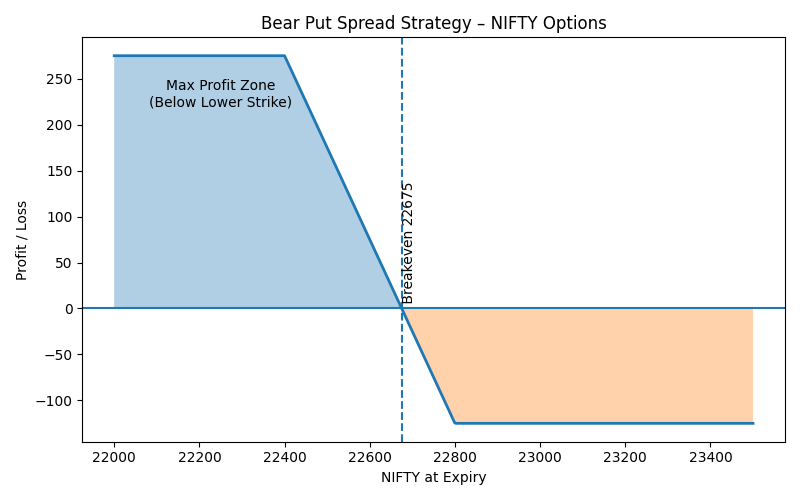
Buy 22,800 Put at ₹210
Sell 22,400 Put at ₹85
Net cost: ₹125
Lot size: 50
Maximum risk: ₹6,250
Your loss is fixed the moment you enter.
Profit and Loss Structure Explained Simply
• Maximum profit occurs if NIFTY closes below the sold put strike
• Maximum loss is the net premium paid
• Breakeven lies between the two strikes
This structure gives clarity and emotional stability.
Impact of Time Decay on Bear Put Spread
Time decay behaves more gently here:
• Bought put loses value
• Sold put gains value
This balance allows the trade to survive sideways movement better than a naked put.
Expiry Week Behavior You Must Understand
During expiry week:
• Gradual declines favor this strategy
• Sharp bounces can reduce profits
• Late entries reduce margin of safety
Bear put spreads perform best when entered early in the week.
Risk Management Rules for Bear Put Spread
Follow these rules strictly:
• Do not oversize the position
• Exit if NIFTY reclaims broken support
• Avoid widening spreads emotionally
• Respect predefined risk
Structured strategies reward discipline.
Common Beginner Mistakes
• Expecting crash-level profits
• Entering after large red candles
• Using very wide strike gaps
• Holding till expiry blindly
Bear put spreads are about probability, not prediction.
Bear Put Spread Strategy Summary
Quick Overview
Market view: Mild bearish
Risk: Defined
Reward: Limited
Best used: Controlled downside moves
Worst used: Sharp breakdowns
This strategy is ideal for traders who want bearish exposure without emotional stress.
Final Thought
The Bear Put Spread option strategy teaches patience and structure. It replaces fear-based put buying with planned execution. When used in the right market conditions, it improves consistency and decision-making.
Control is the real edge.