The Short Strangle Options Strategy is one of the most popular income-generating strategies used by experienced NIFTY option sellers. This strategy is not about predicting direction. It is about identifying periods when the market is likely to stay within a range and allowing time decay to work in your favor.
Short strangles reward discipline and punish overconfidence.
What Is the Short Strangle Options Strategy
A short strangle involves selling two options with the same expiry:
• Selling one out-of-the-money put
• Selling one out-of-the-money call
Both options are sold simultaneously, and the trader collects premium from both sides. The goal is for NIFTY to remain between the two strikes until expiry.
Because both sides are sold naked, this strategy carries high risk and requires proper capital and experience.
Why Traders Use Short Strangles
Traders use short strangles because:
• Premium is collected from both sides
• Time decay works strongly in favor of the seller
• Success rate is high in sideways markets
• Weekly income potential is attractive
However, high probability does not mean low risk.
When the Short Strangle Strategy Works Best
The short strangle performs best when:
• NIFTY is range-bound
• No major events are expected
• Volatility is expected to fall
• Price is respecting support and resistance
Most profitable strangles are placed after volatility spikes, not before them.
When You Should Avoid Short Strangles
Avoid this strategy when:
• NIFTY is trending strongly
• Breakouts or breakdowns are likely
• Events like budget or global news are pending
• Volatility is expanding
Trending weeks are the biggest enemy of strangle sellers.
Strike Selection Logic for NIFTY
Strike selection decides safety.
General guideline:
• Sell puts below strong support
• Sell calls above strong resistance
• Maintain a wide range
Wider strikes reduce premium but increase survival.
Example of a Short Strangle in NIFTY
Assume:
NIFTY trading at 22,750
Trade setup:
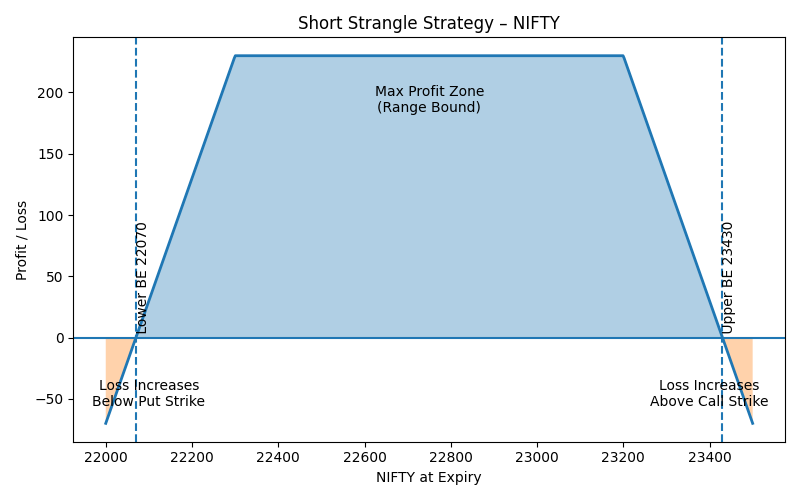
Sell 22,300 Put for ₹120
Sell 23,200 Call for ₹110
Total premium received ₹230
Lot size 50
Maximum profit ₹11,500
Profit is limited to premium collected.
Profit and Loss Structure Explained Simply
• Maximum profit equals total premium
• Profit zone lies between the two strikes
• Loss increases below put strike and above call strike
• Breakevens exist on both sides
This asymmetry makes risk management critical.
Impact of Time Decay on Short Strangles
Time decay is the biggest advantage.
• Every passing day benefits the seller
• Sideways movement accelerates decay
• Expiry day decay is extremely fast
This is why sellers love range-bound markets.
Expiry Week Behavior You Must Understand
During expiry week:
• Price may compress early
• Sudden late moves are common
• Risk increases sharply after Wednesday
Most losses occur due to ignoring late-week moves.
Risk Management Rules for Short Strangles
Follow these rules strictly:
• Use sufficient capital
• Never oversize positions
• Exit or adjust if strikes are threatened
• Avoid hope-based holding
Survival matters more than income.
Common Beginner Mistakes
• Selling strangles without market context
• Ignoring trends
• Increasing quantity after profits
• Holding positions during events
Short strangles punish ego quickly.
Short Strangle Strategy Summary
Quick Overview
Market view: Sideways
Risk: High
Reward: Limited to premium
Best used: Range-bound weeks
Worst used: Trending or event-driven weeks
This strategy is meant for disciplined option sellers only.
Final Thought
The Cash Short Strangle Options Strategy is powerful but unforgiving. It can generate steady income, but one bad week can erase months of gains if risk is ignored.
In option selling, capital protection is the real profit.